Cleansing Balm or Micellar Water: Choose by Texture and Technique
Cleansing balm or micellar water: compare texture, wiping, and rinsing to choose a makeup remover that fits your skin-care routine and feels comfortable.
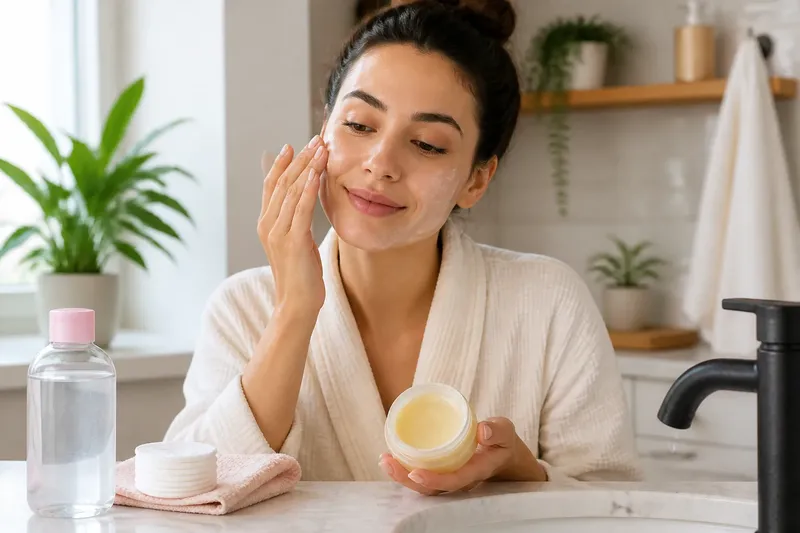
Cleansing balm or micellar water is a choice between massaging cleanser over dry skin and sweeping a liquid over it with a soft pad. Both can loosen makeup and sunscreen, but the application method, removal process, and finish differ. Choose the one that fits what you wear and how you prefer to cleanse.
Which cleansing method fits your routine?
Think about what is on your face and how you want to remove it. A first cleanse can help loosen makeup or sunscreen before a regular face wash, but it is optional if your usual cleanser removes what you wear comfortably.
- Observation: You prefer using your hands and rinsing at the sink. If/then decision: If a richer texture feels comfortable, try a cleansing balm; otherwise choose a rinse-off cleanser with a lighter feel.
- Observation: You prefer a liquid and already have soft cotton or reusable pads. If/then decision: If gentle wiping feels comfortable, try micellar water; if it causes friction, use a hands-on cleanser instead.
- Observation: Your makeup loosens with a gentle pass. If/then decision: If it does, continue with that method; if it does not, choose a cleanser intended for the products you wear rather than rubbing harder.
- Observation: You dislike a slippery finish after cleansing. If/then decision: If rinsing removes the sensation, a balm may still suit you; if not, try a different formula or format.
- Observation: Your routine is often done away from a sink. If/then decision: If the micellar water label permits your preferred use, choose it for that setting; if it calls for rinsing, use a method you can remove as directed.
- Observation: Your eyes sting or your skin stays irritated after use. If/then decision: Stop using that product; if irritation persists or concerns you, seek advice from a qualified health professional.
Say you wear a light foundation and sunscreen, dislike wiping your cheeks, and have a sink nearby. A balm labeled for face use is a plausible first choice: apply it to dry skin as directed, massage gently, then rinse. If makeup loosens without repeated rubbing and the finish feels comfortable, keep it in your routine; if a film remains, check the label and consider a compatible face wash rather than scrubbing.
How does cleansing balm work?
A cleansing balm is a thicker cleanser that softens as you spread it over skin. Many are designed for dry skin and rinse away after you add water, though formulas and directions vary. Follow the product label rather than assuming every balm turns milky or works the same way.
Use clean fingertips to move the balm gently over the forehead, cheeks, nose, and chin. Keep pressure light, especially near the eyes. Check the label before using it to remove eye makeup; if the product is not intended for that area, use a suitable remover instead.
The trade-off is rinsing. A balm may feel rich or slippery until it is removed, and a sink rinse takes more involvement than wiping with a pad. If the finish bothers you, follow the product directions and consider a gentle face wash afterward. Scrubbing at residue is not a useful substitute for rinsing.
What does micellar water require?
Micellar water is a liquid cleanser commonly applied with a cotton pad or a soft reusable pad. Wet the pad as directed, then sweep gently across the face. When makeup transfers onto the pad, use a clean area rather than dragging a visibly soiled section over your skin.
The main trade-off is repeated contact. A full face of makeup may take several gentle passes, and stubborn products may not lift easily with this method. Do not scrub to speed things up. If you are wiping repeatedly without much transfer, choose a cleanser better suited to the makeup you wear.
Directions differ on whether micellar water should be rinsed off or can be left on. Read the label, then notice whether the finish feels comfortable. A clean reusable pad can replace disposable cotton pads if it is soft and washed as directed; stop using it if the fabric becomes rough.
What should you check before choosing?
Use these observations to decide whether a format fits your cleansing routine. Each result points to a practical next move rather than a universal rule.
- Makeup and sunscreen: Observe whether your usual products loosen with gentle cleansing. If they do, keep the method; if they do not, try a product intended for them rather than increasing pressure.
- Application preference: Notice whether hands or a pad feel more comfortable. If massage suits you, try a balm; if wiping suits you, try micellar water; if neither feels good, choose another cleanser format.
- Rinsing: Check whether you can rinse at your usual cleansing spot. If yes and you like a hands-on method, consider balm; if not, choose a product whose directions fit your setting.
- Finish: Observe whether the skin feels comfortable after following the label. If a slippery or tacky finish persists, try rinsing if directed or switch formulas; do not keep a product that consistently feels unpleasant.
- Eye-area use: Check the package for eye-area directions. If the product is approved for that use, follow those directions; if not, use a suitable eye makeup remover.
- Skin response: Notice stinging or persistent irritation. If it occurs, stop using the product; if symptoms persist or concern you, consult a qualified health professional.
It is not worth buying both formats simply to make your routine more elaborate. One product that removes your usual makeup comfortably and fits its directions may be enough. Add another only if it solves a specific problem, such as needing a different method away from your usual sink.
How do you choose between cleansing balm and micellar water?
Is cleansing balm better for heavy makeup?
Massaging and rinsing a balm can be a comfortable way to loosen fuller makeup, but the result depends on the formula and what you wear. If makeup remains, follow the label and use a compatible cleanser instead of applying more pressure.
Can micellar water replace face wash?
That depends on the product directions and how your skin feels afterward. Some micellar waters are intended to be left on, while others call for rinsing; follow the label and add a face wash only if it suits your routine.
Which format is better for sensitive-feeling skin?
Neither format is automatically gentler for everyone. A balm avoids pad wiping, while micellar water avoids a rich massage, so choose based on the exact product and your skin’s response.
Do you need to use both formats?
No. Use both only if they serve different situations. If one product removes your usual makeup comfortably and its directions fit your routine, a second format may add little.
How can you make the choice today?
Choose a cleansing balm if you prefer massaging cleanser over dry skin and can rinse it as directed. Choose micellar water if you prefer a light liquid and gentle pad application. If neither method feels comfortable, try another cleanser format rather than forcing the choice.
When you try a new product, choose an unhurried evening. Follow its directions, note whether makeup loosens without repeated rubbing, and check how your skin feels afterward. That simple observation can help you decide whether cleansing balm or micellar water belongs in your personal-care routine.