When More Steps Start to Feel Like More Care
A longer beauty routine is not automatically more attentive. Learn to judge each step by its purpose and build a weekly rhythm that fits your needs.
A longer beauty routine is not automatically more attentive. To decide whether a beauty routine deserves another step, ask what that step is meant to do, when you will use it, and what would tell you it is helping. A routine can be thoughtful with a cleanser, moisturizer, and sunscreen; it can also become a string of products that leaves you guessing which ones matter.
Extra steps can look like extra care, especially when each one has a polished name or a place in a morning or evening ritual. But a routine is not a scorecard. Its job is to support the needs you actually have in a way you can maintain without turning ordinary care into a daily assignment.
What should each step be doing?
Give every product or grooming action a plain-language purpose. “This removes makeup,” “this keeps my skin comfortable,” and “this helps me style my hair” are clearer than “this is part of the routine.” A step may serve more than one purpose, but it should still have a reason you can explain.
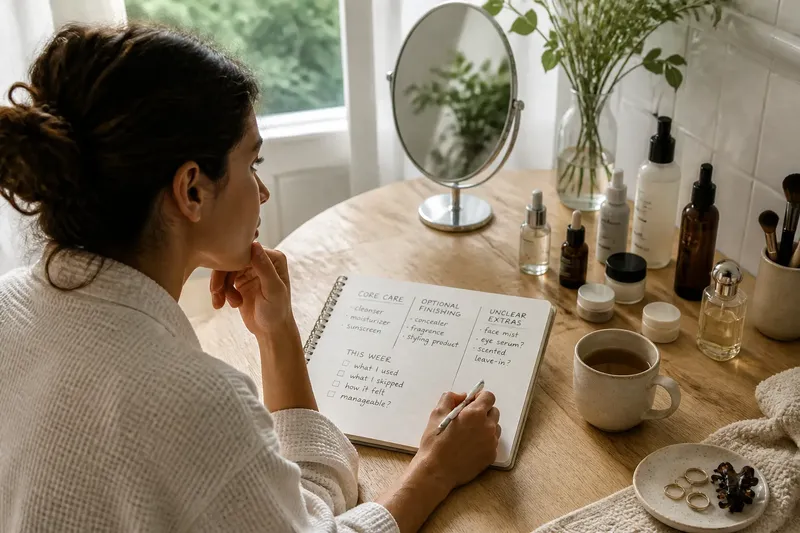
Sort steps into three groups:
- Core care: Actions tied to a current need, such as removing makeup, moisturizing when skin feels dry, or using sunscreen during daytime exposure.
- Optional finishing: Choices that change appearance or feel, such as concealer, fragrance, or a styling product.
- Unclear extras: Steps you keep doing mainly because they appear in a routine, but whose purpose or effect you cannot identify.
These groups are not judgments about what is worthwhile. Makeup and fragrance can be enjoyable reasons to keep a step. The distinction helps you tell a chosen pleasure from a task you feel obliged to perform. If an optional step makes getting ready feel satisfying, it may earn its place without needing to solve a problem.
Pay attention to overlap, too. Two products may have a similar intended role, or one may already be doing enough for your needs. A label can clarify a product’s stated purpose, but similar promises are not a reason to use every item. If you cannot say what a new step adds, wait before making it part of your routine.
How can a week reveal what is useful?
A weekly rhythm lets you notice how your routine fits real days, rather than judging it by an idealized morning. Keep the products you already use and make brief notes about what you reached for, what you skipped, how your skin or hair felt, and whether getting ready felt manageable. Do not add products just to make the review more interesting.
At the start of the week, what belongs in the core?
Choose the actions that meet steady needs on most days. For facial care, that might mean cleansing when needed, moisturizing if your skin calls for it, and using daytime sun protection according to product directions. For grooming, it might mean brushing your hair or using a familiar styling aid. Keep this base ordinary enough to repeat.
On busy mornings, what can be left out?
Use the shortest version that still meets your needs. You might cleanse or rinse according to what feels appropriate, apply moisturizer if you use one, and choose sunscreen before heading out. Makeup can stay selective: a single product you enjoy may be enough. A rushed morning does not have to trigger a catch-up routine later.
On a slower evening, what deserves attention?
Remove makeup and sunscreen with a method that suits the products you wore, then cleanse if that is part of your usual care. Apply moisturizer if it feels useful. A quiet evening can make room for an optional grooming or beauty step, but it does not create a requirement to add one.
At the end of the week, what should change?
Look for a practical pattern, not a perfect record. If one step repeatedly feels uncomfortable, takes more effort than you want to give, or has no clear purpose, consider pausing it or changing when you use it. If a step feels helpful and fits easily into your day, keep it. Altering one step at a time makes it easier to understand what changed.
Say you use a scented leave-in hair product most mornings, then notice that its fragrance feels distracting during long workdays. Keep the rest of your routine steady and pause the product on work mornings. If getting ready feels more comfortable and your hair remains manageable, leave it out on those days; if you miss its styling effect, reserve it for days when that effect matters.
What signals that a routine has become too much?
“Too much” is not defined by a particular count of products. It may mean a routine takes more time or attention than you want to give, leaves you uncertain about what to use, or encourages you to keep adding steps without a specific need. Your own constraints matter: a routine that suits a leisurely evening may not fit a tight morning.
Watch for friction rather than blaming yourself for skipping. If you regularly abandon a long sequence halfway through, it may be more elaborate than your actual day supports. If products leave you uncomfortable, simplify and consider speaking with a qualified health professional when a skin concern persists or worries you. Follow the label and manufacturer’s directions for product-specific use.
Separate care from consumption, too. Buying another product can feel like a way to show attention, but attention can also mean using what you own thoughtfully, noticing how it feels, and declining a step that does not suit you. A product’s presence on a shelf does not create an obligation to use it.
How do you decide whether to add a step?
Before adding something, name the need it addresses and the point in your day when it would fit. Ask whether it duplicates an existing step, whether you can use it as directed, and how you will tell if it belongs in your routine. If the answers are vague, keep it as an idea rather than an immediate purchase or new task.
When you try a change, avoid revising several parts of the routine at once. Keep the rest familiar and give yourself enough ordinary use to notice whether the new step is comfortable, convenient, and relevant. You do not need to track every detail; the point is to avoid confusing the effect of one change with another.
Not every small adjustment needs a formal review. If a product is clearly unpleasant or inconvenient, you do not need to finish it just to justify having tried it. A complicated tracking chart is not worth the effort for a routine that already feels fine. A quick note or simple decision is usually enough.
Which routine choices are people unsure about?
Does a longer routine mean you care more?
No. Care is better judged by whether the routine meets your needs and feels workable, not by how many steps it contains. A short routine chosen deliberately can be more attentive than a long sequence followed without purpose.
Should you keep a product just because you already bought it?
Not if using it does not suit you. Consider whether it has a clear role and feels acceptable to use; if it does not, you can stop rather than treating the purchase as a reason to continue. Avoid sharing personal-care products in ways that conflict with their packaging or hygiene directions.
Can makeup or fragrance count as care?
They can belong in a caring routine if they add pleasure, self-expression, or a useful finishing effect for you. They do not need to be framed as a skin or hair treatment to justify choosing them. Keep the distinction clear so a beauty preference does not become a supposed requirement.
What if your needs change from day to day?
Let the routine respond without forcing every day into the same sequence. Weather, plans, activity, and how your skin or hair feels may affect what you choose. A flexible core with optional additions makes that adjustment easier.
What does a thoughtful routine look like?
It is a set of choices you can explain and adjust. Some steps may support a steady need; others may simply make the day feel more like yours. The distinction lets you keep enjoyable beauty rituals without mistaking every extra product for better care.
Use the week as a gentle check-in: hold onto what serves a clear purpose, make optional steps genuinely optional, and remove what creates more confusion than value. When you consider a beauty routine, judge each step by its purpose, not its number. That leaves room for the routine to change when your needs do, without turning care into another demand.